The Back Pain Fix
For the back that won't let you stand up straight.
Sound Familiar?
You know the feeling — you get out of bed, bend down to tie your shoes, or stand up after sitting too long, and your low back makes itself known. Maybe you've written it off as just getting older. It's not.
All Might is built specifically for that stiff, angry low back — the kind that flares up bending, lifting, or just existing some days. Hit play above and let's get into it.
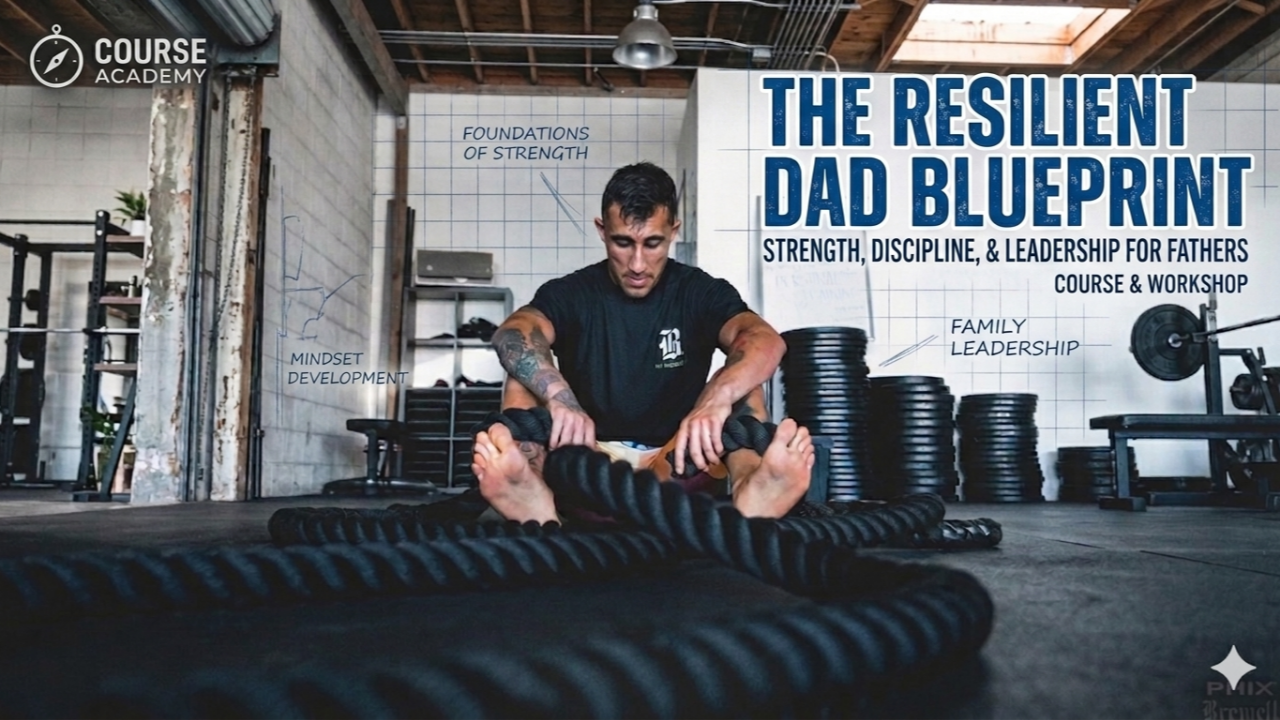
All Might is one piece of a much bigger plan to get you out of pain, moving better, and building real strength again. The Dad Blueprint gives you the entire system — every phase, every fix — plus more support if you want it.
• Base — $50/mo: The complete video library. Every workout, every phase, unlimited access.
• Pro — $200/mo: Everything in Base, plus the private community, live weekly Zoom classes, and a free 1-on-1 call for new members.
Join The Dad BlueprintHere's Where This Fits
The Dad Blueprint is broken into four phases:
- Phase 1: Restoration (Injury & Pain Management) — YOU ARE HERE
Calming down what actually hurts — sciatica, back pain, frozen shoulders — before anything else.
- Phase 2: The Reset (Back 2 Basics)
Rebuilding the fundamental movement patterns your body forgot it had.
- Phase 3: The Build (Smart Lifter's Guide)
Real strength and conditioning again — safely, without waking up old injuries.
- Bonus Phase: The Unlock (Rotational Strength)
Athletic, rotational power and a bulletproof core.
UP NEXT: The Ronin — for the shoulder that won't loosen up (frozen shoulder included).
BEFORE YOU START
What You'll Need
- A flat or adjustable bench
- A cable machine
- A single cable handle attachment
Setup
- Set the bench to a 45-degree angle. Set the cable to the highest setting and attach a single handle.
- The leg closest to the bench gets supported on it — knee up near the head end, foot tucked into the crevice of the pad.
- Your other leg reaches back long behind you.
- Grab the cable and come upright in that position. You should already feel a stretch — on the side opposite whichever leg is on the bench (left leg on the bench = stretch on your right side).
Execution
- Press the cable straight down toward the floor, like you're trying to touch it. Use the bench for support — hold on and lean into it as much as you can while pushing your glute away.
- Retract back to the starting position. Feel your torso get long as that tightness gets pulled up and out.
- On the next press, aim to go a little longer — inch that back leg further behind you each time.
- As your hips open up, you'll feel a big stretch traveling from the front of your hip all the way through your torso.
- Press toward the floor, lean back, get the hip long, reset. Repeat.
What This Undoes
- Your low back — so bending, lifting, and standing up straight in the morning stop being a production.
- Your hips — so stairs, long strides, and getting off the floor loosen back up.
- Your whole torso — because this trains your back, hips, and core to move together instead of just stretching one piece at a time.
“Don't worry if your reps don't look like mine. It's going to take some time depending on where your body's at right now — just get into position as much as you possibly can, and make sure you feel comfortable while you're doing it.”
Fair warning: we call this one the torture chamber around the gym. You'll understand why about rep three. But by the time you finish two sets, you'll have more range than you walked in with.
Sets & Reps
2 sets × 6–8 good reps per side.