The Athletic Core
Not a stretch. A real, total-body core builder.
Sound Familiar?
By now, the aches that probably brought you here are starting to quiet down — and that's exactly when it's time to build something, not just fix something. The Boa Constrictor is a rotational, total-body move that trains your core the way an athlete trains it — hips, shoulders, and core working together through real rotation, not just sit-ups. Hit play above and feel the difference.
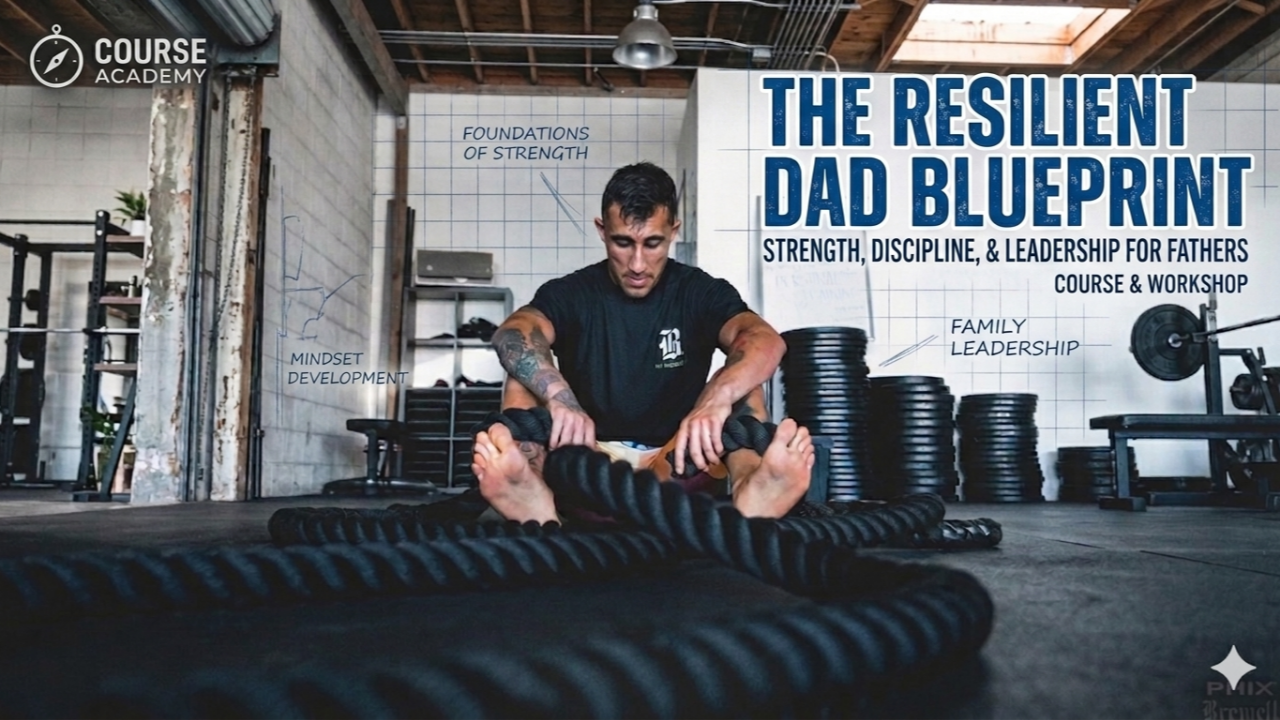
The Boa Constrictor is one piece of a much bigger plan to get you out of pain, moving better, and building real strength again. The Dad Blueprint gives you the entire system — every phase, every fix — plus more support if you want it.
- Base — $50/mo: The complete video library. Every workout, every phase, unlimited access.
- Pro — $200/mo: Everything in Base, plus the private community, live weekly Zoom classes, and a free 1-on-1 call for new members.
Here's Where This Fits
The Dad Blueprint is broken into four phases:
- Phase 1: Restoration (Injury & Pain Management)
Calming down what actually hurts — sciatica, back pain, frozen shoulders — before anything else.
- Phase 2: The Reset (Back 2 Basics) — YOU ARE HERE
Rebuilding the fundamental movement patterns your body forgot it had.
- Phase 3: The Build (Smart Lifter's Guide)
Real strength and conditioning again — safely, without waking up old injuries.
- Bonus Phase: The Unlock (Rotational Strength)
Athletic, rotational power and a bulletproof core.
UP NEXT: The Landmine Step Press — the full-body move that builds muscle and conditioning.
BEFORE YOU START
What You'll Need
- A dumbbell (a kettlebell or medicine ball works too)
- Open space
- A mat or something to kneel on
Setup
- Start in a kneeling position — say your right knee is down.
- Hold the dumbbell right at the outside of your right pocket. That's your starting position.
Execution
- Swing the dumbbell back like you're doing a hip hinge — push off your front foot, drive your heel into the floor, and flex your toes back toward you. You should feel a deep stretch through your hamstring as you swing it back like a samurai drawing a sword.
- Launch it back across and up: your lead knee drives forward as the dumbbell comes up and over that shoulder — think “trying to kiss your bicep.”
- Drive your elbow up as high as you can while your knee pushes forward.
- Bring it back to the starting position at your pocket, and repeat.
- Focus on every single rep — the goal is for each one to get a little cleaner and better as you go, not just to grind through the set.
Start with a light dumbbell. Once your reps are clean and controlled, you can go heavier as you progress — no rush.
What This Connects
- Your core and hips — instead of your hips doing their own thing while your core sits idle.
- Your shoulders and back — moving as one line instead of sagging or compensating for each other.
- Your whole-body alignment — so instead of chasing pain around your body (a back problem, a hip problem, a shoulder problem), you're fixing the disconnect causing all of it.
“This is about building your body to work together — connecting one piece to another. So at the end of the day, your alignment won't be completely off. You won't feel your shoulder sagging, your hips popping one way, and then be dealing with back problems, sciatic problems, hip problems, and shoulder problems all at once.”
Sets & Reps
2 sets × 6–8 clean reps per side.
Caution: Dealing with a stiff back? Go easy — focus more on your position than the swing. Stay more upright and controlled rather than going for a big range right away.
Dealing with shoulder problems? Go easy here too — ease into it rather than swinging hard.
Medical Disclaimer: The Homelander Challenge is provided for educational and informational purposes only and is not intended to replace medical advice, diagnosis, or treatment. Always consult your physician or another qualified healthcare provider before beginning this or any exercise program, especially if you have pain, a current or previous injury, or a medical condition. Perform all movements within a pain-free range of motion. If you experience sharp pain, dizziness, numbness, or any other concerning symptoms, stop immediately and seek appropriate medical care. By participating in this challenge, you acknowledge that you are voluntarily engaging in physical activity and assume all associated risks.