The Full-Body Builder
This is where training starts feeling like training again.
You're Ready For This One If...
If you've made it here, the stiffness and pain that brought you to this program in the first place should be starting to feel like a distant memory. That's the whole point — you don't stay in pain-management mode forever.
The Landmine Step Press is a full-body move that builds real muscle and real conditioning — strength, coordination, and a little bit of fun, all stacked together. Hit play above and see why it's the one guys end up looking forward to.
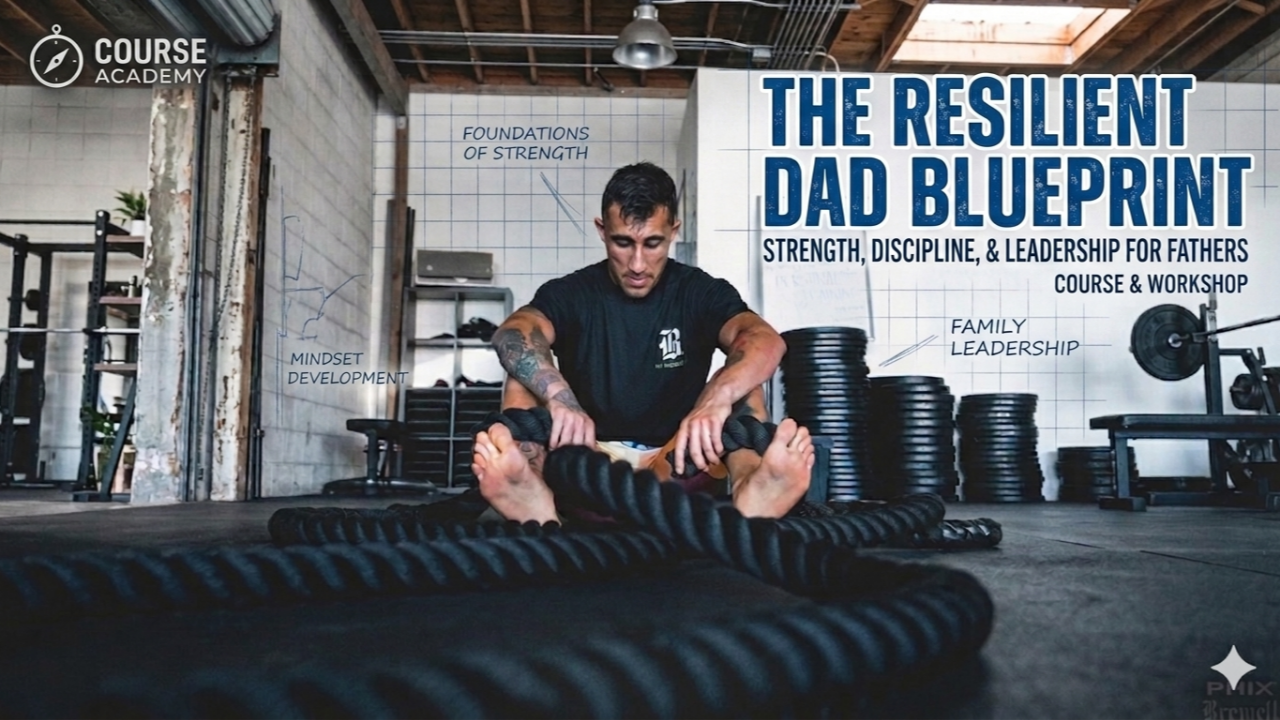
The Landmine Step Press is one piece of a much bigger plan to get you out of pain, moving better, and building real strength again. The Dad Blueprint gives you the entire system — every phase, every fix — plus more support if you want it.
- Base — $50/mo: The complete video library. Every workout, every phase, unlimited access.
- Pro — $200/mo: Everything in Base, plus the private community, live weekly Zoom classes, and a free 1-on-1 call for new members.
Here's Where This Fits
The Dad Blueprint is broken into four phases:
- Phase 1: Restoration (Injury & Pain Management)
Calming down what actually hurts — sciatica, back pain, frozen shoulders — before anything else.
- Phase 2: The Reset (Back 2 Basics)
Rebuilding the fundamental movement patterns your body forgot it had.
- Phase 3: The Build (Smart Lifter's Guide) — YOU ARE HERE
Real strength and conditioning again — safely, without waking up old injuries.
- Bonus Phase: The Unlock (Rotational Strength)
Athletic, rotational power and a bulletproof core.
THAT'S THE TOUR. Inside The Dad Blueprint, this is just one phase of four — Restoration, The Reset, The Build, and The Unlock — all waiting for you.
Book A Free Consultation
If the last five days of workouts has helped, let's see if we can dial in what it is your body needs. Hopefully these workouts have shown that most of your chronic pain issues can be solved on your own with the right fitness regeiment.
Book Your Free CallBEFORE YOU LOAD THIS ONE UP
What You'll Need
- A barbell
- A landmine holder / attachment
Setup
- Load a barbell into a landmine holder. No weight yet — bar only until the movement is dialed in.
- Hold the end of the bar in a C-grip.
- Right leg in front, bar in your right hand — same side.
- Drop comfortably into a lunge. Push your hips back until you feel it in your glute, not just your quads — that's what fires this whole motion.
Execution
- From the lunge, press the bar while you step your left leg forward into full extension.
- As you reach, brace your abs and reach a little further — think about getting your right rib toward the landmine in front of you.
- You'll feel a stretch down your whole side, from your oblique to your hip, while your chest, shoulder, and bicep do the pressing work.
- Here's the hard part: pull the bar back in tight to your body before you step back. Get into a tall, controlled position first.
- Once the bar is tight and you're tall, slowly step your left leg back into the lunge, under control.
- Reset and repeat — find the glute, step as you press, control it back in, reset.
Fair warning: on your first rep, if your core checks out for even a second, that bar is going to do whatever it wants. It's going to feel like a bad Disneyland ride. Stay locked in and you'll manage it just fine.
What This Builds
- Coordination — your lunge, press, and reach firing together instead of one at a time.
- Real strength — through your glutes, shoulders, chest, and core, not just a stretch.
- Control — the kind of core awareness and body control that carries into everything else you do.
“Once your body's feeling good and starts to understand movement, that's a great sign — that means it's healing. That's when you stop just managing pain, and get back to actually training again.”
Sets & Reps
2 sets × 5–7 reps. Go as fast or as slow as you need to — just find the glute first, then step as you press, and reset with control.
Caution: No weight yet. Master the movement first — bar only, no plates — until it's fully under control.
If you can't control the bar with no weight on it, don't add weight. That's not you failing — that's the exercise doing its job.
New to lunges? You might feel this in your quads before you feel it in your glutes at first — keep pushing your hips back until you find the glute. That's what fires this whole movement.
Medical Disclaimer: The Homelander Challenge is provided for educational and informational purposes only and is not intended to replace medical advice, diagnosis, or treatment. Always consult your physician or another qualified healthcare provider before beginning this or any exercise program, especially if you have pain, a current or previous injury, or a medical condition. Perform all movements within a pain-free range of motion. If you experience sharp pain, dizziness, numbness, or any other concerning symptoms, stop immediately and seek appropriate medical care. By participating in this challenge, you acknowledge that you are voluntarily engaging in physical activity and assume all associated risks.